
Your home’s plumbing system works behind the scenes every day, delivering water to faucets, showers, and appliances. Over time, however, pipes can deteriorate, develop leaks, or become restricted by corrosion and mineral deposits.
For Phoenix homeowners, recognizing the warning signs of aging plumbing can help prevent extensive water damage and repeated repair expenses.
The seven common signs that your home may need whole-house repiping are frequent leaks, discolored water, low water pressure, noisy pipes, visible corrosion, outdated pipe materials, and rising plumbing repair costs. While these symptoms do not automatically mean every pipe needs replacement, several occurring together may indicate a larger problem.
Understanding these warning signs can help you determine when to request a professional plumbing assessment.
What Is Whole-House Repiping?
Whole-house repiping involves replacing some or all of a home’s existing water supply pipes with new materials, commonly PEX or copper.
Unlike a localized plumbing repair, repiping addresses deteriorating water supply lines throughout the property. It may be appropriate when multiple sections show significant damage or recurring failures.
Phoenix homes with older plumbing systems may experience corrosion, mineral buildup, or leaks beneath concrete slab foundations.
At Hometown Plumbing Pros, we provide residential and commercial repiping services throughout the Phoenix metro area, using PEX and copper piping selected according to each property’s needs.
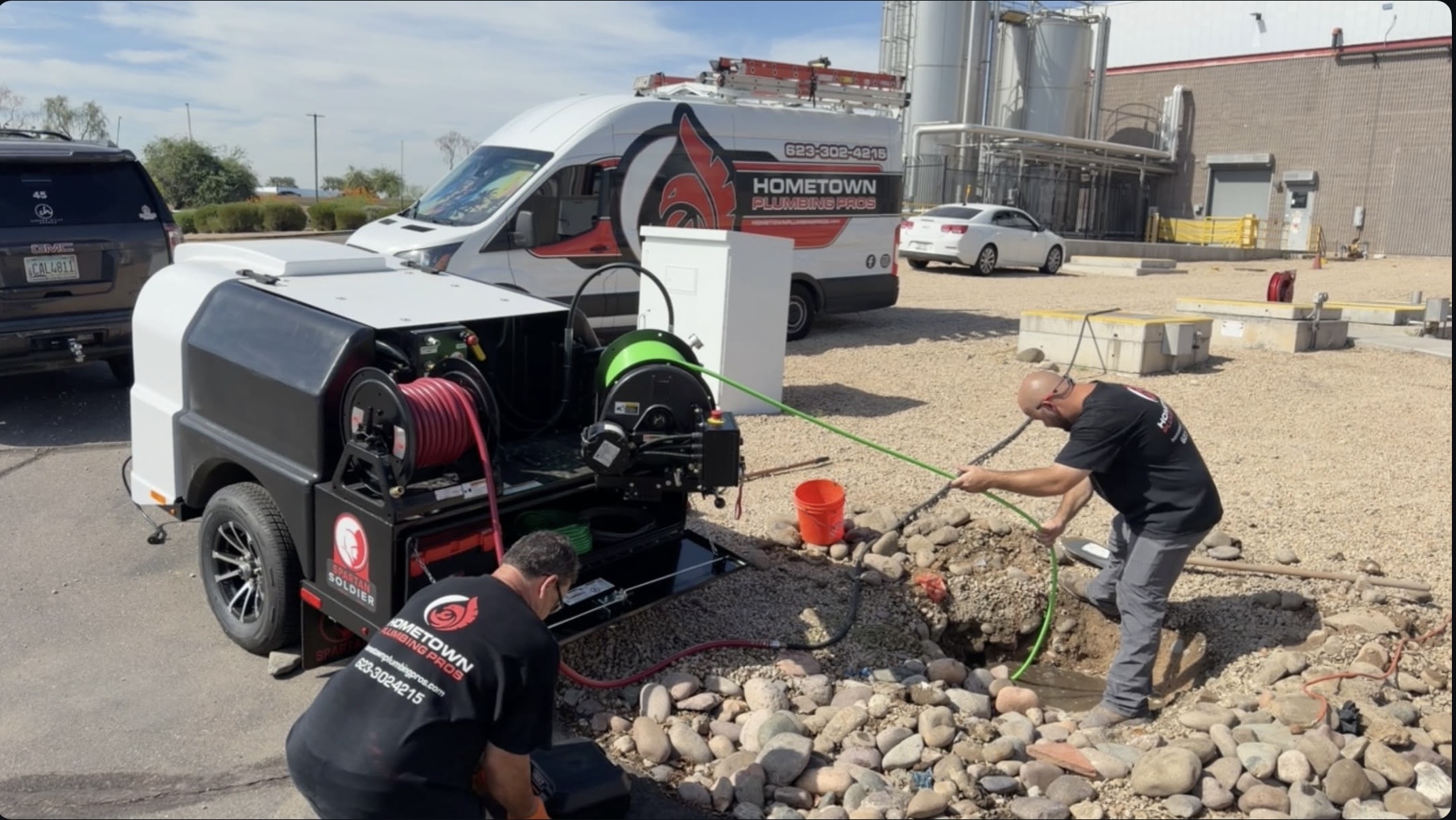
1. Frequent Plumbing Leaks and Water Damage
Occasional plumbing leaks do not necessarily indicate that your entire system needs replacement. However, repeated leaks in different areas of your home can suggest widespread pipe deterioration.
Watch for warning signs such as:
- Water stains on ceilings or walls
- Damp cabinets beneath sinks
- Bubbling paint or damaged drywall
- Unexplained increases in water bills
- Repeated leaks around pipe connections
Phoenix homes built on concrete slab foundations may also experience leaks in water lines running beneath the slab.
These hidden leaks can damage flooring and surrounding materials if left untreated.
If you’re frequently scheduling plumbing repairs, ask whether targeted repairs remain practical or whether repiping could provide better long-term value.
Professional leak detection can help identify the source and extent of the problem before a replacement decision is made.
2. Rusty or Discolored Water From Multiple Faucets
Brown, yellow, or reddish water can indicate corrosion in older metal pipes, particularly galvanized steel.
As these pipes deteriorate, rust particles may enter the water and contribute to discoloration, staining, and restricted flow.
However, discolored water does not always mean your household pipes are failing. Municipal water main maintenance, sediment disturbances, and water heater problems may produce similar symptoms.
Consider these questions:
- Does discoloration occur at several faucets?
- Is the problem limited to hot water?
- Does it happen repeatedly?
- Are you also experiencing low pressure or visible pipe corrosion?
If discoloration persists, contact your water utility or a qualified plumber to investigate its cause.
Replacing corroded supply pipes may resolve discoloration originating within your plumbing system, but repiping cannot address every water quality issue.
3. Low Water Pressure Throughout Your Home
A noticeable reduction in water flow can make showering, washing dishes, and other daily activities frustrating.
Older galvanized steel pipes may develop internal rust and mineral deposits that restrict water flow.
However, low water pressure can also result from partially closed valves, malfunctioning pressure regulators, clogged fixtures, or hidden leaks.
Pay attention to whether the issue affects one fixture or several areas of your home.
Low pressure at multiple fixtures may indicate a broader plumbing problem, particularly when combined with frequent leaks or aging pipes.
A professional plumber can test water pressure, inspect accessible connections, and determine whether repair or replacement is necessary.
4. Noisy or Banging Water Pipes
Banging, rattling, or whistling sounds can indicate plumbing problems that deserve attention.
Common causes include water hammer, unsecured pipes, pressure fluctuations, or restricted water flow.
For example, a loud banging sound when a faucet closes may result from a sudden pressure change rather than deteriorating pipes.
Fortunately, some plumbing noises can be corrected without replacing the water lines.
However, persistent noise combined with leaking connections, corrosion, or poor water flow may warrant a more comprehensive inspection.
A professional assessment can identify the source of the noise and determine whether your pipes need repair, additional support, or replacement.
5. Visible Corrosion or Deteriorating Pipes
Visible corrosion is another warning sign homeowners should take seriously.
Inspect accessible pipes beneath sinks, near water heaters, and around exposed plumbing connections.
Common indicators include:
- Reddish-brown rust on steel pipes
- Green or blue deposits around copper connections
- Flaking or deteriorating pipe surfaces
- Moisture around corroded fittings
- Repeated leaks near aging joints
Surface discoloration alone does not establish that a pipe needs replacement. However, substantial corrosion, thinning pipe walls, and recurring leaks can indicate more serious deterioration.
A plumber can evaluate the affected materials and recommend whether localized replacement or broader repiping is appropriate.
6. Aging or Outdated Plumbing Materials
The age and material of your home’s water lines can help determine whether repiping should be considered.
Older Phoenix properties may contain galvanized steel, copper, or other piping materials with different maintenance requirements.
Galvanized steel: Older galvanized pipes can corrode internally, causing reduced water flow, rust deposits, and leaks.
Copper: Copper pipes can provide decades of service, but corrosion, water chemistry, installation conditions, and age may contribute to deterioration.
Polybutylene: Some homes built or replumbed between the late 1970s and mid-1990s contain polybutylene piping, a material associated with premature failures.
Pipe age alone does not determine whether replacement is required. Maintenance history, installation quality, water conditions, and visible deterioration also matter.
Modern repiping commonly uses PEX or copper, with material selection depending on the property’s configuration and project requirements.
At Hometown Plumbing Pros, we help homeowners evaluate existing plumbing and understand available replacement options.
7. Increasing Plumbing Repair Costs
Repeated plumbing repairs can become expensive, particularly when deteriorating pipes develop leaks in multiple locations.
Beyond service expenses, hidden leaks may contribute to increased water bills and damage to walls, flooring, or cabinets.
Consider reviewing your plumbing history:
- How often have you needed leak repairs?
- Are problems developing in different areas?
- Are repair expenses increasing?
- Have previous repairs addressed the underlying cause?
If repairs are becoming frequent, comparing their cumulative cost with a repiping estimate can help you evaluate the available options.
Whole-house repiping requires a larger initial investment, but it may reduce future failures associated with deteriorating supply pipes.
Is Whole-House Repiping Worth It for Phoenix Homeowners?
Repiping may be worth considering when multiple pipes are deteriorating, repairs are becoming frequent, or existing materials are no longer performing reliably.
However, not every leak, pressure issue, or discolored faucet requires a complete plumbing replacement.
A professional evaluation should consider your home’s pipe materials, plumbing history, visible damage, and the scope of necessary repairs.
Most repiping projects at Hometown Plumbing Pros are completed within a few days, although timelines vary by property size and project complexity.
Our team also uses techniques intended to minimize unnecessary wall damage during installation.
Schedule a Repiping Assessment With Hometown Plumbing Pros
If your home is experiencing frequent leaks, discolored water, aging pipes, or recurring plumbing problems, a professional assessment can help determine the appropriate next step.
Hometown Plumbing Pros provides whole-house repiping services throughout Phoenix and surrounding East Valley and West Valley communities, including Mesa, Gilbert, Chandler, Scottsdale, Glendale, Peoria, and Surprise.
Our team can evaluate your plumbing concerns, explain available repair and replacement options, and provide upfront pricing.
Call Hometown Plumbing Pros at (623) 302-4215 or contact us online to request a free repiping estimate.